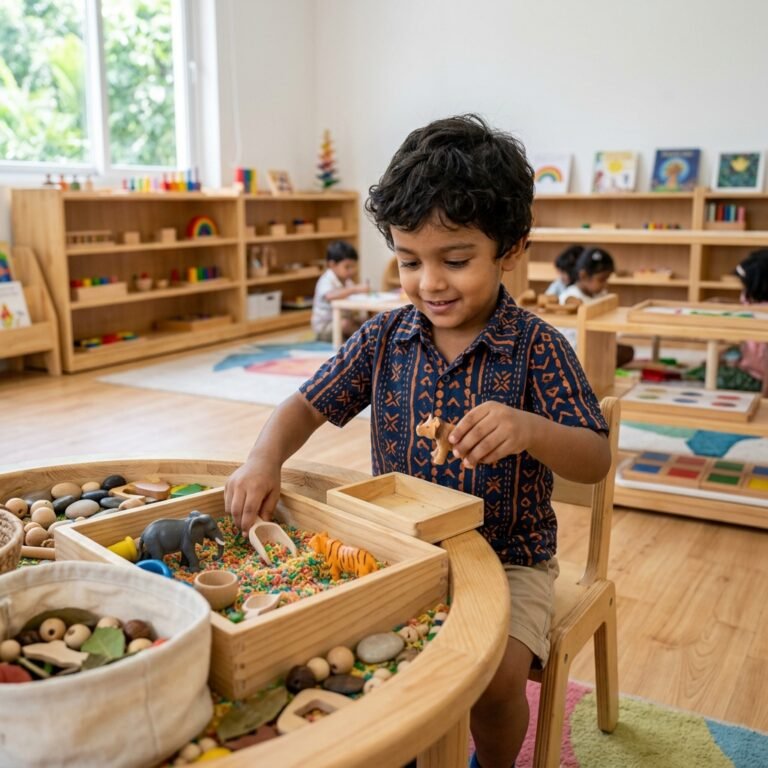

Every successful preschool begins with a vision. But transforming that vision into a thriving educational institution requires careful planning, the right systems and a genuine commitment to early childhood education.
Starting a preschool is a unique entrepreneurial journey. Unlike many traditional businesses, a preschool combines education, business management, community relationships and the responsibility of nurturing young children.
For aspiring entrepreneurs in India, opening a preschool offers an opportunity to build an institution that creates meaningful educational experiences while pursuing a financially sustainable business.
However, running a preschool involves much more than finding a suitable property, installing colourful furniture and opening admissions.
From curriculum design and teacher recruitment to parent engagement and financial planning, several important decisions influence the success of a preschool.
In this guide, we explore the essential steps involved in starting a preschool in India.
1. Understand the Preschool Business
Before investing in a preschool, it is important to understand how the business operates.
Preschools typically offer early childhood education programmes such as Playgroup, Nursery, Junior Kindergarten and Senior Kindergarten.
Some institutions also provide daycare services, extended-care programmes and other age-appropriate enrichment activities.
Unlike businesses built around one-time purchases, preschools depend heavily on long-term parent relationships, educational quality, operational consistency and positive experiences.
Parents are not simply purchasing a service. They are trusting an institution with their child’s early development, safety and well-being.
That trust must be earned every day.
A successful preschool therefore needs to balance three priorities:
Educational excellence: Delivering developmentally appropriate learning experiences.
Operational excellence: Maintaining reliable systems, trained staff, safety processes and financial discipline.
Parent confidence: Creating transparent communication and positive relationships with families.
These three elements form the foundation of a sustainable preschool business.
2. Research the Local Preschool Market
One of the first steps in opening a preschool is understanding the local market.
Not every residential neighbourhood offers the same opportunity.
A location may have excellent infrastructure but limited demand from families with young children. Another neighbourhood may have strong demand but substantial competition.
Before selecting a location, study:
- Residential developments and family demographics.
- Existing preschools within the surrounding catchment.
- Fee structures and programme offerings.
- Accessibility and commuting patterns.
- Parent expectations and preferences.
- Potential demand for daycare services.
Visit competing preschools where appropriate, study their public offerings, and speak with parents to understand what matters most to them.
This research can help determine your positioning, programme mix and pricing strategy.
The lesson: Select a preschool location based on demonstrated market potential, not simply because a property is available at an attractive rent.
3. Decide Between an Independent Preschool and a Franchise
An important early decision is whether to establish an independent preschool or partner with an existing preschool franchise brand.
Both approaches offer advantages.
Starting an independent preschool
An independent preschool allows entrepreneurs to develop their own brand, curriculum, processes and operating systems.
It offers substantial creative and operational freedom.
However, the entrepreneur is responsible for establishing almost every component of the institution.
These include academic planning, teacher training, brand development, admissions processes, technology systems and operational policies.
Starting a preschool franchise
A preschool franchise generally provides access to an established brand and defined academic and operational frameworks.
Depending on the franchisor, the support may include curriculum, training, infrastructure guidance, marketing resources and technology.
However, entrepreneurs should carefully evaluate franchise fees, royalties, contractual obligations and the actual support available.
The right choice depends on your experience, investment capacity, entrepreneurial goals and willingness to develop systems independently.
At Tykes Early Years, our franchise approach draws upon the academic and operational experience developed through Kidzonia International Preschools.
Our aim is to help franchise partners establish thoughtfully designed early-learning institutions with access to structured educational and operational support.
Explore the Tykes Franchise Opportunity
4. Prepare a Comprehensive Investment Plan
One of the most common mistakes aspiring preschool entrepreneurs make is focusing only on initial setup expenditure.
A preschool requires both capital investment and ongoing operational funding.
Your investment plan should consider:
Initial setup expenses: Property deposits, interiors, classroom furniture, educational materials, safety infrastructure, technology and branding.
Pre-opening expenses: Recruitment, staff training, launch marketing and other setup activities.
Recurring operational expenses: Rent, salaries, utilities, maintenance, teaching materials, marketing and administration.
Working capital: Funds required to manage operations while admissions and fee collections develop.
If you choose a franchise, account for applicable franchise fees, royalties and other contractual expenses.
The investment required will vary significantly according to the city, location, property, infrastructure standards, programme offering and business model.
Prepare a realistic financial plan with conservative, expected and optimistic admission scenarios.
This will help you understand how your preschool might perform under different circumstances.
5. Choose the Right Preschool Property
The property you select influences your operating costs, parent convenience, learning environment and future admissions.
A suitable preschool property should be evaluated for:
- Accessibility for parents and children.
- Child-safe entry and exit arrangements.
- Adequate classroom and activity space.
- Suitable ventilation, lighting and sanitation.
- Safe movement within the premises.
- Appropriate emergency access.
- Space for child-friendly learning activities.
- Compliance with applicable local requirements.
Do not evaluate a property based only on its size or appearance.
Its layout, safety characteristics, permitted use and suitability for young children are equally important.
Before signing a lease, have the property reviewed against your educational, operational, safety and legal requirements.
6. Understand Registration, Permissions and Compliance
Preschool operators must understand the legal and regulatory requirements applicable to their particular location and business model.
These can vary across states and local authorities.
Depending on the jurisdiction and nature of the institution, relevant considerations may include business registration, local permissions, building use, fire safety, sanitation, employee-related obligations and child protection requirements.
Daycare services may introduce additional requirements.
Before making significant financial commitments, obtain location-specific guidance from the appropriate authorities and qualified professional advisers.
Educational quality should also be planned around relevant national guidance.
India’s National Curriculum Framework for Foundational Stage 2022 emphasises play-based learning, developmentally appropriate experiences and holistic development during the early years. NCERT
Regulatory compliance and educational quality are related but distinct responsibilities. Following a curriculum framework does not, by itself, establish that a preschool has obtained all required approvals.
7. Build a Strong Early Childhood Curriculum
The curriculum is at the heart of every preschool.
Young children learn through exploration, play, interactions, movement, stories, music and hands-on experiences.
A quality preschool curriculum should support multiple dimensions of development, including:
Cognitive development: Thinking, exploring, problem-solving and developing early concepts.
Language development: Listening, speaking, communication and emergent literacy.
Physical development: Gross motor and fine motor skills.
Social development: Cooperation, relationships and communication.
Emotional development: Confidence, independence and self-regulation.
A developmentally appropriate curriculum should not simply introduce formal academic instruction at an earlier age.
India’s foundational-stage framework places play at the centre of early learning, including both child-initiated play and thoughtfully guided activities. NCERT
At Tykes Early Years, our academic philosophy draws upon the experience of Kidzonia and its emphasis on experiential early childhood education.
We believe a thoughtfully planned learning environment allows children to explore, discover and grow with confidence.
8. Recruit and Train the Right Team
Teachers are central to a preschool’s reputation.
Even a beautifully designed school can struggle if its educators are not adequately prepared.
A preschool team typically includes teachers, support staff, an academic or centre leader, and administrative or admissions personnel.
Recruitment should assess more than academic qualifications.
Look for individuals who demonstrate patience, communication skills, empathy, professionalism and an understanding of young children.
Once recruited, staff should receive structured training covering:
- Curriculum implementation.
- Classroom management.
- Child safety and safeguarding.
- Parent communication.
- Observation and developmental documentation.
- Emergency procedures.
- Daily operating processes.
Training should be continuous rather than limited to the period before opening.
For franchise owners, ongoing academic and operational support should be an important consideration when selecting a brand.
9. Develop a Preschool Admissions Strategy
A preschool cannot depend entirely on parents discovering it by chance.
Admissions require a planned approach.
Ideally, marketing activity should begin well before the opening date.
An effective launch strategy may include neighbourhood outreach, digital presence, parent information sessions, local partnerships, school visits and referral programmes.
Your admissions process should make it easy for prospective parents to understand the curriculum, facilities, safety practices, operating hours and fees.
Equally important is the quality of interaction during school enquiries and visits.
Parents should feel welcomed, informed and confident.
A structured admissions process can help ensure enquiries receive timely attention and appropriate follow-up.
10. Establish Strong Operational Systems
Opening a preschool is a milestone.
Operating it consistently is the larger responsibility.
Daily operations require attention to attendance, safety, staff management, academic planning, parent communication, fee administration, inventory and infrastructure maintenance.
Clear procedures help reduce avoidable mistakes and improve consistency.
Technology can support these activities, but it should complement responsible school leadership rather than replace it.
At Kidzonia, operational experience has reinforced the importance of combining academic quality with disciplined day-to-day management.
That learning informs the approach we are developing for Tykes franchise partners.
11. Build Parent Trust from Day One
Parent confidence is one of the most valuable assets a preschool can develop.
Trust grows through everyday interactions.
These include how a teacher welcomes a child, how promptly a school communicates important information, how concerns are addressed and how consistently the institution maintains its commitments.
Parents also value clear information about their child’s experiences and development.
A preschool should therefore establish transparent communication processes and encourage constructive parent feedback.
Ultimately, the strongest preschool brands are built not only through advertising, but through the experiences families have with them.
12. Plan for Long-Term Sustainability
An entrepreneur should approach preschool ownership with a long-term perspective.
Opening admissions successfully is only the beginning.
Over time, focus on student retention, parent satisfaction, educational quality, staff development, financial performance and operational discipline.
Evaluate performance regularly and adapt where necessary.
Successful preschool ownership requires both a genuine commitment to children and a responsible approach to business management.
Beginning Your Preschool Entrepreneurship Journey
Starting a preschool in India can be a meaningful entrepreneurial opportunity for individuals passionate about education and institutional development.
However, enthusiasm alone is not enough.
The right location, thoughtful investment planning, a strong curriculum, capable educators, robust operating systems and parent trust all contribute to building a sustainable institution.
For entrepreneurs exploring a franchise model, the right partner can provide access to knowledge, systems and ongoing support.
Tykes Early Years brings together early childhood education expertise and operational learning from Kidzonia International Preschools to support aspiring preschool entrepreneurs.
If you are considering opening a preschool, begin by understanding the opportunity, evaluating your resources and selecting a model aligned with your goals.
Your journey towards building an early-learning institution begins with an informed decision.
Ready to explore preschool entrepreneurship?
Download our Preschool Startup Checklist or explore the Tykes franchise opportunity.